
Permanent Pet Stain & Odor Removal
The stain you can see is not the real problem. Why pet odor keeps coming back on humid Kansas City days, and what removing it permanently actually takes.
By Rick Long, Owner · Updated August 13, 2026
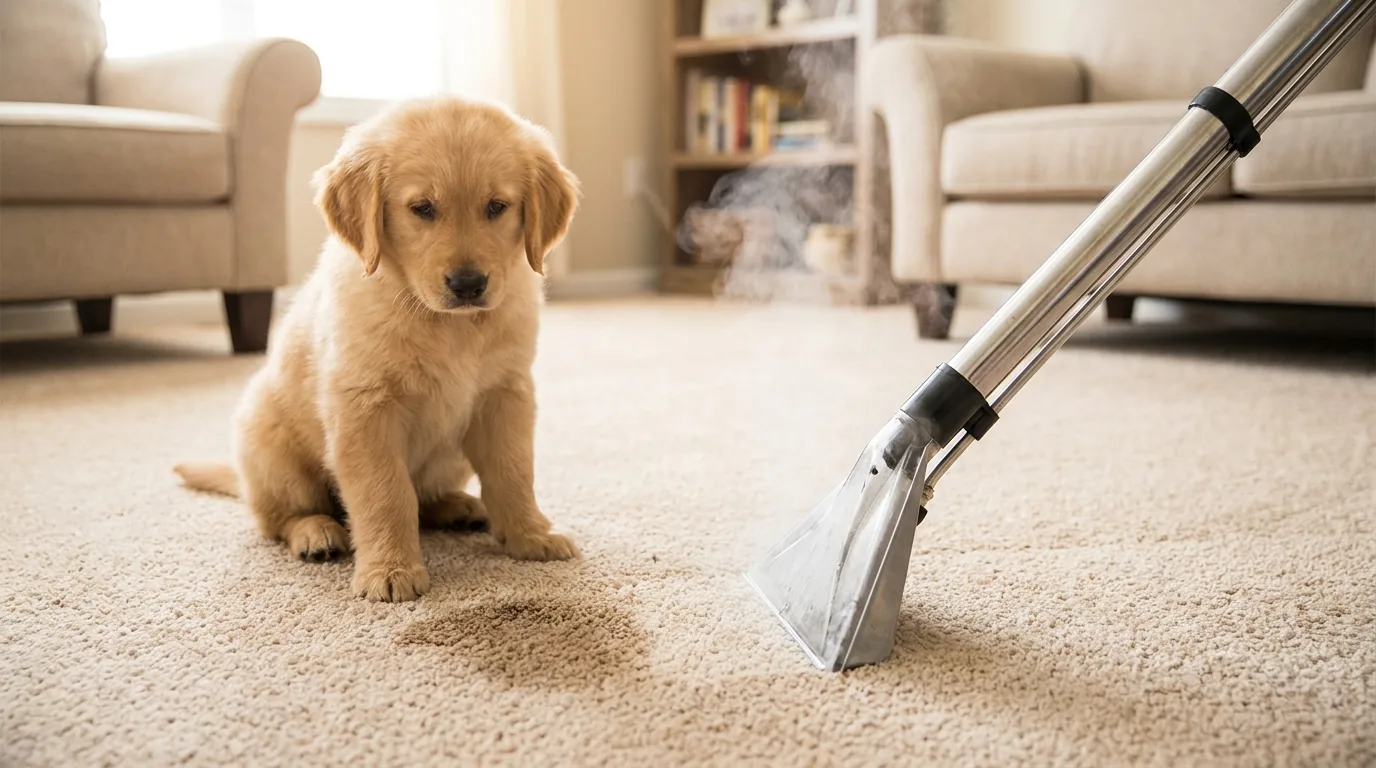
Key takeaways
- Pet odor that returns on humid days is coming from below the carpet fiber, usually the padding and sometimes the subfloor. Surface cleaning cannot fix a source it never touches.
- Urine spreads wider as it soaks down. A spot the size of a quarter on the surface is routinely the size of a dinner plate at the padding, and repeat accidents stack contamination in the same place.
- Odor can be eliminated permanently when the treatment reaches every contaminated layer. A visible stain is a separate question, because urine left for months can permanently alter carpet dye.
- Most store-bought sprays mask odor or set the stain. Blot a fresh accident with dry towels and plain water, skip the scrubbing and the heat, and get real extraction in while it is still fresh.
- IICRC-certified owner Rick has been finding and treating the full urine footprint in Kansas City homes since 1991, not just the spot you can see. Free estimates at (816) 836-1767.
Why Does Pet Odor Come Back After the Carpet Looks Clean?
Direct answer
Because the odor source is usually below the carpet. Urine soaks through the fiber into the padding and, in severe cases, the subfloor. Cleaning the carpet face removes what you can see, but the residue underneath keeps releasing odor, and Kansas City humidity makes it stronger every summer.
The call usually goes the same way. The spot got cleaned months ago, it looked fine all spring, and then a stretch of August humidity brought the smell back like the accident happened yesterday. Nothing about that is mysterious. Dried urine leaves behind salts and uric acid crystals, and those crystals pull moisture straight out of the air. Every muggy Kansas City afternoon rehydrates them, and rehydrated crystals release odor. That is why the problem reliably gets loud from May through September and quiets down in winter, and why homeowners so often conclude a cleaning worked when the weather did the hiding. The carpet face that got cleaned really is clean. The trouble is that carpet is a layered system, and a surface cleaning only ever touched the top layer. Below the fiber sits the backing, then the padding, then the subfloor, and a healthy sized dog puts out enough volume in one accident to reach all three. Rick has mapped rooms where the surface showed almost nothing and the contamination underneath covered several square feet. That lower layer is the reservoir. Until something removes or breaks down what is in it, the odor cycles with the weather no matter how many times the surface gets shampooed.
What Happens When Pet Urine Soaks Into Carpet?
Direct answer
Fresh urine wicks through the carpet backing into the padding within minutes. As it dries it turns alkaline and forms uric acid crystals that bond to the material and resist ordinary cleaning. The wet area also spreads sideways as it soaks, so the real footprint is always larger than the visible spot.
Fresh urine goes down warm and slightly acidic, which lets it move through carpet backing fast. As it dries it swings alkaline, and that shift is what does the lasting damage. Alkaline residue feeds bacteria, reacts with carpet dye, and leaves behind crystallized uric acid that ordinary detergents barely touch. The other thing people underestimate is spread. Liquid does not soak straight down in a neat column. It fans out when it hits the denser padding, so a quarter sized spot on the surface is routinely a dinner plate at the pad and wider again where it reaches the subfloor. Repeat accidents make everything worse, because pets mark where they smell urine, and each new accident lands on the same saturated zone. In the harder cases we find urine that traveled along the underside of the carpet to the tack strip and the baseboard, places no spray bottle will ever reach. None of this means the carpet is ruined. It means the job is bigger than the visible spot, and any treatment plan that starts and ends at the surface is a plan to do this all over again next summer.
Can Pet Stains Really Be Removed Permanently?
Direct answer
Odor, yes. When professional enzyme treatment reaches every contaminated layer and the residue is extracted, the odor source is destroyed and does not return. The visible stain depends on time. Urine left for months can permanently change carpet dye, and no cleaning can restore color the dye has lost.
Odor and stain are two different problems that happen to share an address, and being straight about the difference is how we keep the word permanent honest. Odor is a chemistry problem, and chemistry problems can be solved. When the treatment genuinely reaches the full depth of contamination and the broken down residue gets extracted, the source is gone and the smell does not come back, not in July, not ever. That part we stand behind. The visible stain depends on what the urine did while it sat. Caught within days or weeks, most pet stains release completely with proper treatment. Left for months, urine can oxidize and permanently alter the dye, which is why old spots settle into that stubborn yellow or orange. At that point there is nothing left to clean. The color of the carpet itself has changed, much like a bleach spot, and cleaning cannot put dye back. The honest fix for true dye loss is patching the area with matching donor carpet, which is repair work Rick also does. What you should never accept is anyone promising to erase a years old stain sight unseen. Nobody can know that before looking at what the dye has done.
What Does Professional Pet Odor Removal Actually Involve?
Direct answer
Three stages. First the full footprint is mapped with UV black lights and moisture meters, because hidden deposits are common. Then professional grade enzymes are applied with enough volume and dwell time to break down uric acid through the carpet and padding. Finally hot water extraction removes all the residue.
It starts with finding the real footprint, because treating the wrong sized area is the most common way these jobs fail. Rick map contamination with UV black lights and moisture readings instead of trusting the visible spot, and homeowners are usually surprised by what shows up, including deposits nobody knew existed. The treatment itself is a volume and time problem. Professional grade enzymes are far more concentrated than anything sold at retail, and we apply them with enough liquid to penetrate through the carpet and padding to the full depth the urine reached, then let them dwell long enough to actually consume the uric acid crystals. A quick spray and wipe is not an enzyme treatment, whatever the bottle says. Then everything gets flushed out with hot water extraction, because broken down urine and spent enzyme solution left in the carpet is just new residue. Severe cases get a penetrating treatment that reaches the floorboards themselves. All of it happens in your home, the products are non-toxic and safe around pets and kids, and you walk the treated areas with us before we leave. The inspection is part of the free estimate, so you know the scope before committing to anything.
Why Do Store-Bought Sprays Often Make Pet Stains Worse?
Direct answer
Retail sprays only wet the surface while the contamination sits deep in the padding. Fragrance products mask the smell from you but not from your pet, which invites remarking. Diluted enzymes get too little dwell time to work, and scrubbing or heat can spread the stain and set it.
The pet aisle is mostly working against you. Perfume based sprays cover the smell for a few days without touching the source, and to a dog or cat the urine scent underneath is still perfectly readable, which is an invitation to mark the exact same spot again. Retail enzyme products are real chemistry heavily diluted, and most instructions get them blotted up minutes after application, long before enzymes have done anything meaningful to crystallized uric acid. High alkaline formulas can set protein residue and shift dye. And scrubbing, the most natural instinct in the world, frays carpet fiber while pushing urine deeper and wider at the same time. Rental machines earn a special mention. Most put down far more water than their vacuums can recover, which carries contamination further into the padding and can leave it wet for days, and the heat some of them run locks protein stains in place. We have walked into plenty of homes where the original accident would have been a simple job, and the month of home remedies that followed is what made it a hard one. If you have already tried three products on a spot, stop there. Each new chemical makes the eventual fix less predictable.
How Do You Keep an Accident From Becoming Permanent?
Direct answer
Act the same day. Blot hard with dry towels until almost nothing transfers, rinse lightly with plain cool water and blot again, and leave a weighted towel stack overnight. No scrubbing, no heat, no layered products. Then have the spot professionally extracted while the chemistry is still fresh.
Speed beats products, every time. When an accident happens, put a thick stack of dry towels on the spot and stand on it, then repeat with fresh towels until almost nothing transfers. A weighted stack left overnight keeps pulling moisture up out of the padding while you sleep. If you rinse, use small amounts of plain cool water and blot it back out, and skip everything else. Handled that way, most fresh accidents come out completely with one professional extraction, and some never need us at all. The accidents that turn into permanent problems are almost never the fresh ones. They are the quiet repeat spots, the corner behind the guest room door nobody noticed for a month, the marking zone that got a different remedy every week. If a spot has history, or a smell keeps returning no matter what you try, that is the moment to have it inspected rather than treated blind. Rick has been doing this work across Independence and the Kansas City metro since 1991, the estimate is free, and the phone call to (816) 836-1767 costs you nothing but the minute it takes to describe what your pet did.