
Carpet Steam Cleaning in Independence
Steam cleaning barely uses steam. What hot-water extraction really does to Independence, MO carpet, how long drying takes, and when it is the wrong call.
By Rick Long, Owner · Updated July 28, 2026
Key takeaways
- "Steam cleaning" is the trade nickname for hot-water extraction, and almost no professional carpet job uses actual steam. Heated water and a cleaning solution go into the pile under pressure, and a vacuum pulls the water, the solution, and the loosened soil straight back out.
- Recovery matters more than the spray. Any machine can put water into a carpet. What separates a floor that stays clean for a year from one that looks dingy in three weeks is how much of that water comes back up.
- Most Independence homes do well on a professional cleaning every 12 to 18 months, and closer to every 6 to 12 months with pets, kids, or a household that runs shoes-on.
- Properly extracted carpet is normally dry in about 6 to 12 hours. Carpet still damp a full day later means too much water went down or not enough came back out.
- Extraction does not fix damage. Bleach spots, burns, ripples, and urine that soaked into the pad need repair or a separate treatment, and Rick will say so at the estimate. Free estimates across Independence and the KC metro at (816) 836-1767.
What Does Steam Cleaning Actually Mean?
Direct answer
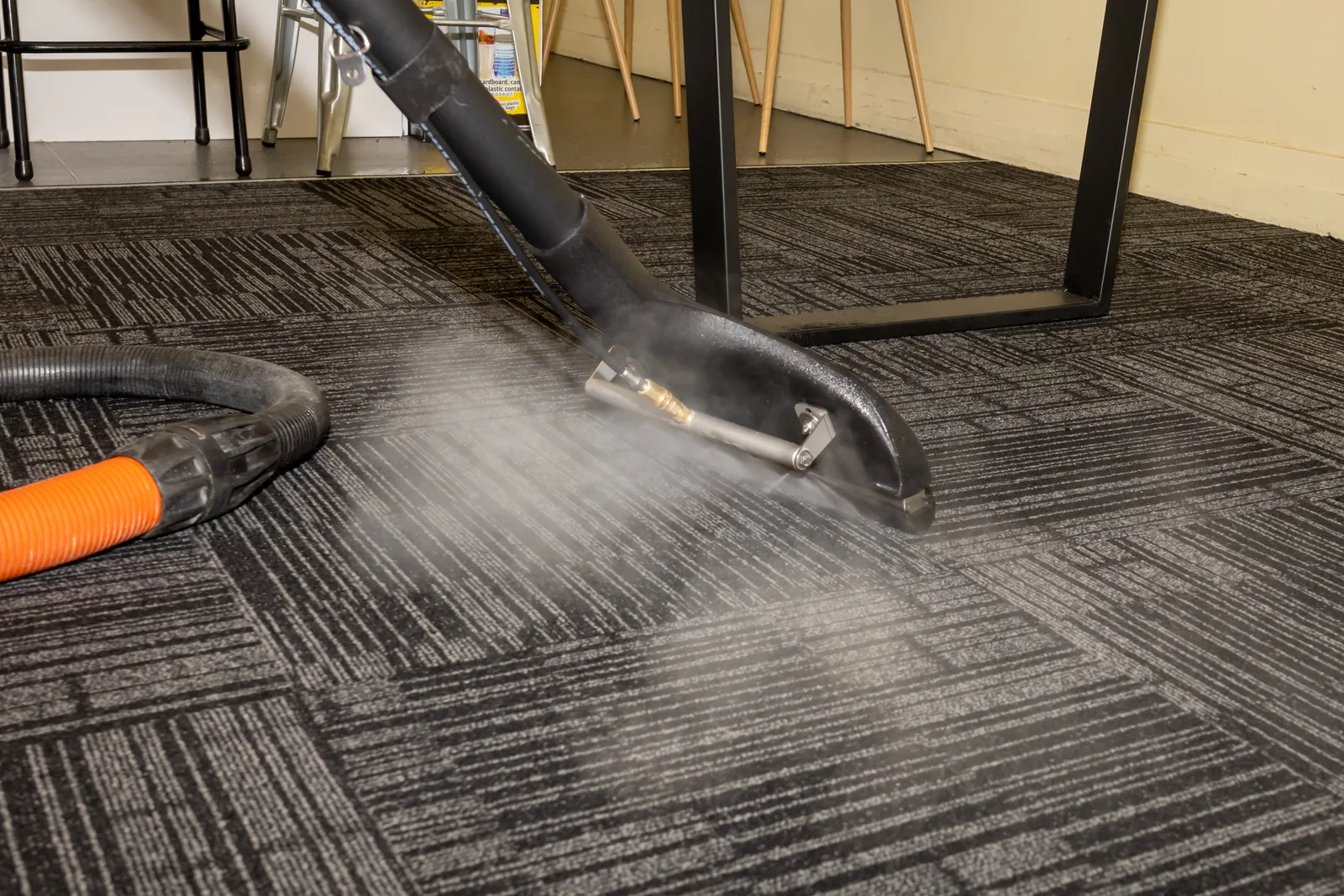
Steam cleaning is the common name for hot-water extraction. A machine heats water, injects it into the carpet with a cleaning solution under pressure, then immediately vacuums that water back out along with the soil it released. Very little true vapor is involved, which is why the name confuses people.
The phrase comes from the trade, not from physics. When Ricks pull into a driveway in Independence and the homeowner says they want the carpet steam cleaned, what they are describing is hot-water extraction, the method carpet manufacturers themselves recommend and the one most major mills expect if you want to keep a warranty intact. Water is heated, mixed with a solution matched to the fiber and the soil, and pushed down into the pile under pressure through a wand. On the same pass, a strong vacuum pulls that water back up, and the soil the solution just released comes with it. You will see a little vapor rise off a carpet on a cold morning, which is where the nickname started, but the cleaning is not happening because of steam. It is happening because heat and controlled agitation break the bond between the soil and the fiber, and because the vacuum actually removes what got broken loose. That last part is the whole game. Any machine on the market can put water into a carpet. The difference between a floor that still looks right a year later and one that goes dingy again in three weeks is how much of that water, and how much of the dissolved soil suspended in it, leaves the room in a recovery tank.
Is It Worth Steam Cleaning a Carpet?
Direct answer
For any carpet that is still structurally sound, yes. Extraction removes the embedded grit that grinds fibers down from the inside, plus the allergens and detergent residue that vacuuming leaves behind. It is often the difference between carpet that reaches its full expected life and carpet that gets replaced years early.
Think about what carpet actually is. It is the largest textile in the house, it sits on the floor, and everything that comes through the door ends up in it. Vacuuming pulls the loose surface debris, and it should happen weekly, but it does almost nothing about the fine grit that has worked its way down to the base of the pile. That grit is abrasive. Every step grinds it against the fiber, the fiber loses its shape and its light reflection, and traffic lanes start to look permanently gray even after they are technically clean. At that point the carpet is not dirty. It is worn, and no cleaning brings it back. Extraction on a sensible schedule is what keeps you from getting there. There is an honest limit to this, and it is worth saying out loud: if a carpet is already at the end of its life, cleaning improves how it looks for a while, but it does not add years back. Rick would rather tell you that at the estimate than take money for a service that will disappoint you in a month.
Do Steam Cleaners Really Work on Carpet?
Direct answer
A handheld vapor steamer is useful on spots, grout, and some upholstery, but it is not a carpet cleaning system. It has no extraction, so any moisture it lays down has to evaporate up through the pile, and the soil it loosens stays in the carpet instead of leaving in a tank.
This is the question behind a lot of disappointed purchases. Somebody buys a vapor steamer, uses it on a traffic lane, and the carpet looks better for about two days before the spot comes back darker than the carpet around it. Nothing went wrong with the machine. It did exactly what it was built to do, which is produce hot vapor. What it cannot do is take anything away. When soil gets suspended in moisture and that moisture dries in place, the soil rises with it and settles at the tips of the fibers, which is why the spot ends up looking worse. Professionals call that wicking, and it is the single most common way a well-meaning cleaning makes a carpet look dirtier. A true extraction unit solves it by pairing the water going down with vacuum lift coming back up on the same stroke. Vapor steamers earn their keep in this trade, they are just used for different work: sanitizing hard surfaces, softening a stubborn spot before extraction, cleaning tight upholstery seams. Nobody in the business cleans a room of carpet with one.
Can You Steam Clean a Carpet Yourself?
Direct answer
You can, and for a light refresh between professional cleanings a rental machine beats doing nothing. The limits are real. Rental units heat less, pull far less vacuum, and hold a fraction of the water, so more solution tends to go down into the carpet than comes back out of it.
Rick has no interest in talking anyone out of a rental machine for the right job. A kid spilled juice in one bedroom, or a single room needs freshening before company arrives, and a rental will handle it fine as long as you go slow and make extra dry passes with the trigger off. Where it goes wrong is scale and saturation. Doing a whole house with a machine that recovers a small share of what it sprays leaves water sitting in the backing and the pad, and that is how you get a sour smell three days later, brown wicking in the traffic lanes, and a carpet that takes two days to dry. The second problem is residue. Grocery store carpet shampoo is built to foam, and foam leaves a sticky film that grabs new soil faster than the carpet did before it was cleaned. That is where the belief that cleaning your carpet makes it get dirty faster comes from, and on a DIY job it is often true. Professional extraction finishes with a rinse step at a controlled pH so nothing sticky stays behind.
How Long Does Carpet Take to Dry After Steam Cleaning?
Direct answer
Plan on roughly 6 to 12 hours for most residential carpet cleaned with proper extraction, and expect the longer end during a humid Kansas City summer. Air movement shortens it considerably. Carpet that is still noticeably wet a full day later is a sign of over-wetting or weak recovery.
Drying is where the KC climate earns a mention. In July and August the outside air is already carrying about as much moisture as it can hold, so opening the windows to speed things up usually does the opposite. The better move is to run the air conditioning, which pulls humidity out of the house as it cools, and to keep ceiling fans going in the rooms that were cleaned. Ricks use air movers on heavier jobs for the same reason. A few practical things help on your end. Stay off the damp carpet in street shoes, because a freshly cleaned floor picks up soil from the bottom of a shoe faster than a dry one does. Leave the protective blocks or foil tabs under furniture legs until the carpet is fully dry, since wood stain and metal glides can transfer into a damp pile and those marks are difficult to reverse. And give it the full window before putting rugs back down. Trapping moisture under a rug on a damp carpet is a reliable way to create an odor that was not there before.
Why Does Independence Carpet Get Dirty So Fast?
Direct answer
Western Missouri sits on heavy clay soil, and clay tracks in as fine staining grit rather than loose dust that vacuums away. Add humid summers, winter ice melt, and gravel from drives and lots, and carpet here takes on more abrasive soil per month than carpet in a drier climate.
Rick has been cleaning floors around this metro since 1991, and the pattern holds house to house. The soil in Jackson County is clay heavy, so what comes in on shoes is not the dry powder that shakes loose from a mat. It is fine, it is faintly colored, and it packs down into the base of the pile where a household vacuum cannot reach it. Winter adds a second problem, because the ice melt and road treatment that keep the streets usable also ride inside on boots, and the salts in them leave a white haze in entry areas that keeps recrystallizing until somebody extracts it out. Then summer humidity sets in and everything already down in the carpet holds moisture, which is exactly when pet odor and general mustiness get noticeable in a house that seemed fine in April. None of this is a reason for alarm. It is a reason the cleaning interval that works in Phoenix does not work here. Good entry mats inside and out, a hard rule about shoes in the main living areas, and a professional extraction on a real schedule handle most of it.
When Is Steam Cleaning the Wrong Call?
Direct answer
When the problem is damage rather than soil. Bleach spots, burns, permanent dye stains, delamination, ripples, and urine that soaked into the pad are not cleaning problems. Extraction makes the rest of the floor look better and leaves those exactly as they were.
This is the part most cleaning companies skip, so here it is plainly. Bleach and many acid based cleaners strip dye out of the fiber permanently, and no amount of hot water puts color back. That spot is a patch or a spot re-dye. A carpet with ripples or buckles needs to be re-stretched, and cleaning a rippled carpet actually tends to make the waves more obvious once the pile relaxes. Pet urine that went through the backing into the pad is two problems, the visible stain and the source underneath, so a surface cleaning knocks the smell down for a week and then it returns on the first humid day. That job needs the contaminated pad addressed and a treatment aimed at the odor source, not another pass with a wand. Fiber matters too. Wool and some natural fiber rugs want lower heat, a different chemistry, and a gentler hand than a nylon wall to wall carpet, and Rick cleans area rugs right in the home rather than hauling them off to a plant. If what you have is damage, we will tell you at the estimate and give you the honest options, including the ones that do not involve hiring us.