
Carpet Patching: Burns & Pet Damage
A cigarette burn, a bleach spot, or a chewed corner does not mean new carpet. What patching fixes, how Rick does it, and when to patch or replace.
By Rick Long, Owner · Updated July 23, 2026
Key takeaways
- Most localized carpet damage is a patch job, not a replacement. A burn, a bleach spot, or a chewed corner affects a few square inches, and cutting that section out and dropping in a matching piece leaves the rest of a good floor alone.
- Bleach is the one kind of damage no cleaning can undo. Bleach strips the dye out of the fiber permanently, so the honest options are patching the spot or attempting a spot re-dye, never scrubbing it back.
- The patch has to come from somewhere. The best donor is your own carpet, taken from a closet floor or from under a large piece of furniture, because it is a guaranteed match for color, pile, and dye lot.
- Pet urine that soaked through is two problems, not one. The stain and odor live in the backing and the pad, so a lasting fix often pairs a patch with pad replacement and a separate odor treatment.
- Not every damaged carpet is worth patching, and Rick will say so. When the damage is spread across a room, or no donor carpet exists, replacement is the more honest answer. Free estimates across the KC metro at (816) 836-1767.
What Is Carpet Patching, and When Is It the Right Fix?
Direct answer
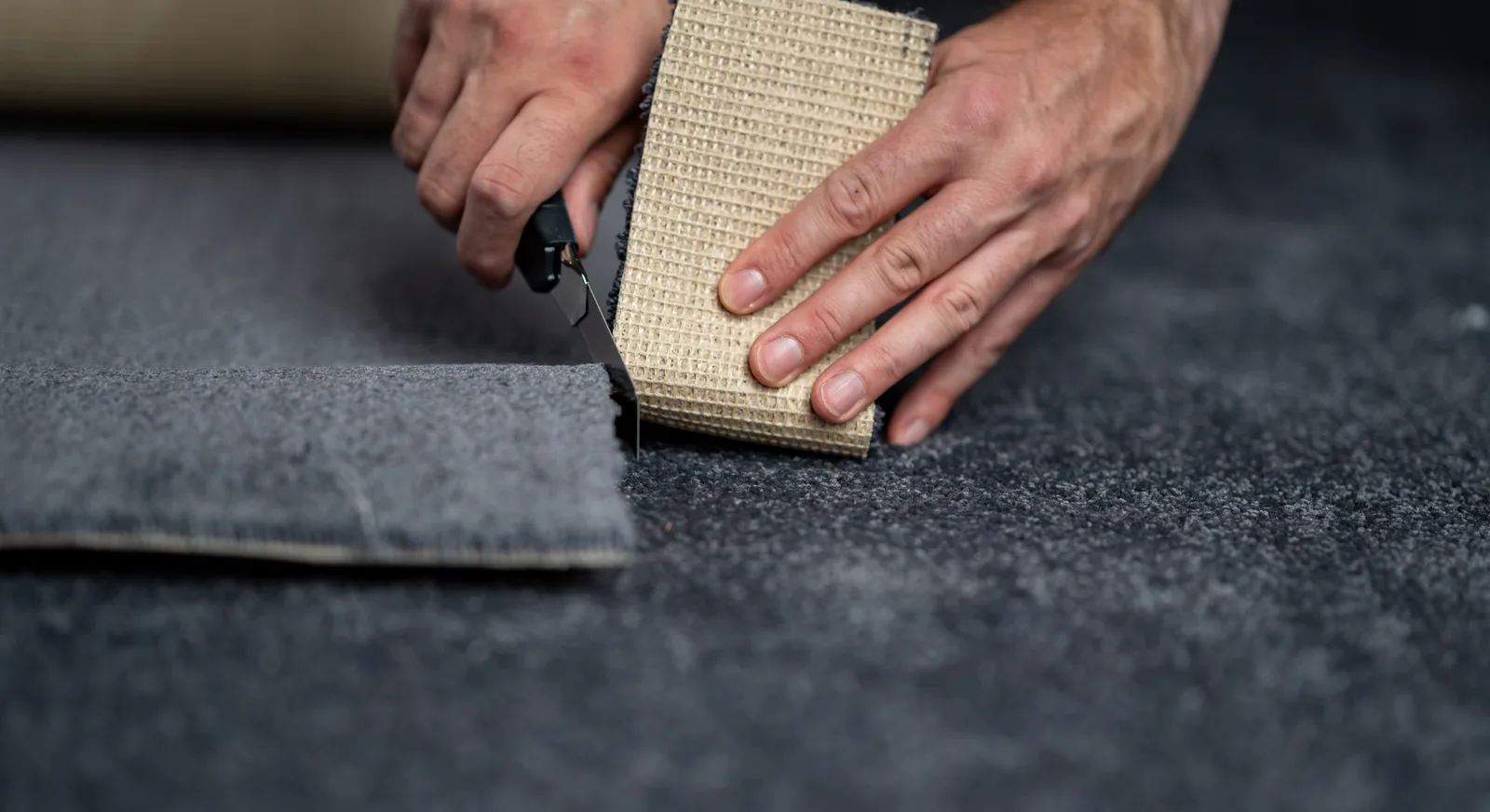
Carpet patching cuts out a small area of damaged carpet and drops in a matching piece, seam-sealed and blended into the surrounding pile. It is the right fix when the damage is localized, a burn, a bleach spot, a single stain, or a chewed corner, and the rest of the carpet still has good life left in it.
The first reaction to a ruined spot on the carpet is almost always the same, and it is almost always wrong. Homeowners look at a burn the size of a quarter and start pricing out a whole room of new carpet. In most of the repairs Rick runs across the Kansas City metro, the damage is measured in square inches, and the fix is a patch. We cut a clean, straight-sided opening around the damage, take a matching piece of carpet, seat it into the opening so the pile runs the same direction, and seal the seam underneath so it holds. Done right on the right floor, you have to know where the repair is to find it. Patching earns its keep when a floor is otherwise sound. If the carpet is only a couple of years old, or the damage is one unlucky spot on an expanse that still looks and feels good, spending replacement money makes no sense. The judgment call is whether the damage is local or everywhere, and that is the honest conversation we have at the estimate.
Can You Really Repair a Cigarette Burn in Carpet?
Direct answer
Yes, and burns are one of the most common patch jobs there is. A cigarette, a fireplace ember, or a dropped iron scorches the fiber tips, which cannot be cleaned or fluffed back. For a small surface scorch the burnt tips can be trimmed away, and for anything deeper the spot is cut out and patched.
Burns are the repair we see most, and they come in two grades. A light surface scorch, where an ember only kissed the tops of the fibers, can sometimes be handled without a patch at all. Rick trims the blackened tips down below the burn line, and because carpet pile has depth, the shortened spot disappears into the surrounding fibers. That trick has a ceiling. Once the burn has melted or hardened the fiber down toward the backing, there is nothing left to trim, and trimming further just digs a visible pit. That is patch territory. We cut the damaged area out entirely and set in a fresh piece. Iron burns and fireplace embers tend to go deeper than a cigarette and almost always need the full patch. The good news for anyone staring at a scorch mark is that a burn is a textbook repair, not a reason to recarpet a family room.
How Do You Fix a Bleach Spot on Carpet?
Direct answer
You cannot clean a bleach spot out, because the color is gone rather than covered. The two real options are patching the area with matching carpet or attempting a spot re-dye to rebuild the lost color. Which one fits depends on the carpet, the size of the spot, and whether a donor piece is available.
Bleach is the damage people most often expect us to clean away, and it is the one kind we cannot. A stain sits on top of the fiber, so cleaning has something to lift. Bleach does the opposite. It strips the dye out of the fiber and leaves the material itself intact but colorless, usually a pale orange or white blotch where the carpet used to be its real shade. No amount of scrubbing brings color back to fiber that no longer holds any. That leaves two honest paths. The reliable one is a patch, cutting the discolored fiber out and replacing it with a matching piece, same as a burn. The other is a spot re-dye, rebuilding color into the bleached fiber, which can work well on smaller spots but is finicky and depends heavily on the carpet and the surrounding shade. Rick looks at the spot in person and tells you which approach actually fits, rather than promising a clean that physically cannot happen.
What Can Be Done About Pet Damage to Carpet?
Direct answer
Plenty, and the fix depends on the kind of damage. Chewed or clawed edges at doorways and transitions get re-bound or patched. Urine that soaked through is deeper, because the stain and odor reach the backing and the pad, so a lasting repair often pairs a patch with pad replacement and a dedicated odor treatment.
Pet damage is really a few different problems wearing the same label. The most visible is mechanical: a dog that worried the carpet at a doorway until the edge frayed, or a puppy that chewed a corner down to the backing. Those are patch and re-bind repairs, and transitions where the carpet meets tile or a threshold are a routine spot for them. Urine is the harder one, and the mistake is treating it as a surface stain. By the time you can see or smell it, the moisture has usually passed through the carpet into the pad and sometimes into the subfloor, and that is where the odor lives and keeps coming back. Cleaning the face fiber alone leaves the source untouched. A genuine fix for a soaked area frequently means lifting the carpet, replacing the contaminated pad, treating the spot, and patching the face if the fiber itself is stained past saving. Odor is its own job, which is why we treat it directly through our pet stain and odor removal work rather than pretending a patch alone will end it.
Where Does the Patch Carpet Come From?
Direct answer
The best source is your own carpet. A piece cut from a bedroom closet floor, or from a hidden spot under a large piece of furniture, is a guaranteed match for color, pile, and dye lot. Leftover installer remnants work too. Buying a retail match after the fact rarely blends, because dye lots and product lines change.
A patch is only as good as the carpet you patch with, and the single biggest factor in an invisible repair is where that donor piece comes from. Our first choice, every time, is your own floor. Closets are the classic donor. The carpet in there is the same age, the same dye lot, and has seen almost no traffic or sunlight, so it matches the room perfectly and it hides the repair in a place nobody looks. A spot under a bed, a bookshelf, or a permanent piece of furniture works the same way. We take the donor from the hidden spot, use it to patch the visible damage, and if needed put a plain filler piece back where the donor came from, moving the problem to somewhere it will never be seen. If you kept a leftover roll end from the original installation, even better. What almost never works is buying new carpet off a shelf to match an older floor. Dye lots vary between production runs, lines get discontinued, and a few years of light and wear change the installed carpet, so a store-bought piece tends to announce itself.
Will the Patch Be Noticeable?
Direct answer
With a good donor piece and careful work, a patch is very hard to spot. The keys are matching the carpet exactly, running the pile in the same direction, and sealing the seam so no gap shows. The honest caveats are dye-lot differences and wear: a patch from an unworn closet can read slightly fuller than the traffic around it.
This is the question every homeowner asks, and it deserves a straight answer instead of a sales one. A patch done with your own carpet, seated so the pile leans the same way as the surrounding floor and seam-sealed underneath, is genuinely difficult to find once it settles in. Pile direction matters more than people expect, because carpet reflects light differently depending on which way the fibers lean, and a patch dropped in backward will flash a different shade under a lamp even when the carpet is a perfect match. We set the direction deliberately for that reason. The honest limits are worth stating. A donor piece pulled from a closet has never been walked on, so right after the repair it can sit a hair taller or fuller than the matted traffic lane around it, and it tends to blend further as the room gets used. And any patch is only as invisible as the match behind it, which is exactly why the donor conversation comes first. We would rather set expectations at the estimate than have you hunting for a seam afterward.
Patch or Replace: How Do You Decide?
Direct answer
Patch when the damage is localized, a donor piece is available, and the surrounding carpet is still sound. Lean toward replacement when the damage is spread across the room, no matching carpet exists, or the floor is already worn, delaminated, or near the end of its life. The deciding factors are extent, donor availability, and remaining life.
The decision comes down to three honest questions, and we walk through them with you at the estimate rather than steering you toward the bigger invoice. First, how spread out is the damage. One burn or one bleach spot is a patch all day. A dozen scattered pet spots across a family room is a floor that has moved past patching, because each repair is its own seam and at some point the repairs cost more and look worse than starting over. Second, is there a donor. No matching carpet in a closet, under furniture, or in a saved remnant makes an invisible patch a long shot, and that changes the math. Third, how much life is left in the carpet. Patching a five-year-old floor with plenty of wear left is money well spent. Patching a carpet that is already crushed flat, delaminating, or fifteen years down the road is putting a good repair into a floor that needs replacing anyway. When the answer really is replace, we tell you, because sending you off to buy new carpet you actually need beats charging you for a patch that only delays it. For a straight read on your own floor, Rick gives free estimates across the Kansas City metro at (816) 836-1767.