
Couch Cleaning in Kansas City
Couch cleaning in Kansas City, start to finish: what a visit involves, what actually comes out of the fabric, and what will still be there after.
By Rick Long, Owner · Updated November 17, 2026
Key takeaways
- Couch cleaning happens in your house. The furniture never leaves the room it sits in, and there is no travel surcharge anywhere in our 28+ city Kansas City service area.
- The code on the furniture tag decides the method before anything else does. W, S, WS or X tells Rick whether the piece gets hot water extraction, a low moisture clean, or no liquid at all.
- Most of what makes a couch look tired is body oil and hand soil, and it concentrates in three places: the headrest line, the inside faces of the arms, and the front edge of the seat cushions.
- Sun fade, dye that bled out of a throw blanket, pilling and cat claw damage are fiber damage rather than soil, and no cleaning process reverses them.
- Most couches are dry to the touch in 2 to 6 hours. Rick Long has owned R&L since 1991 and is IICRC certified. Free estimates at (816) 836-1767.
What Does Couch Cleaning in Kansas City Actually Involve?
Direct answer
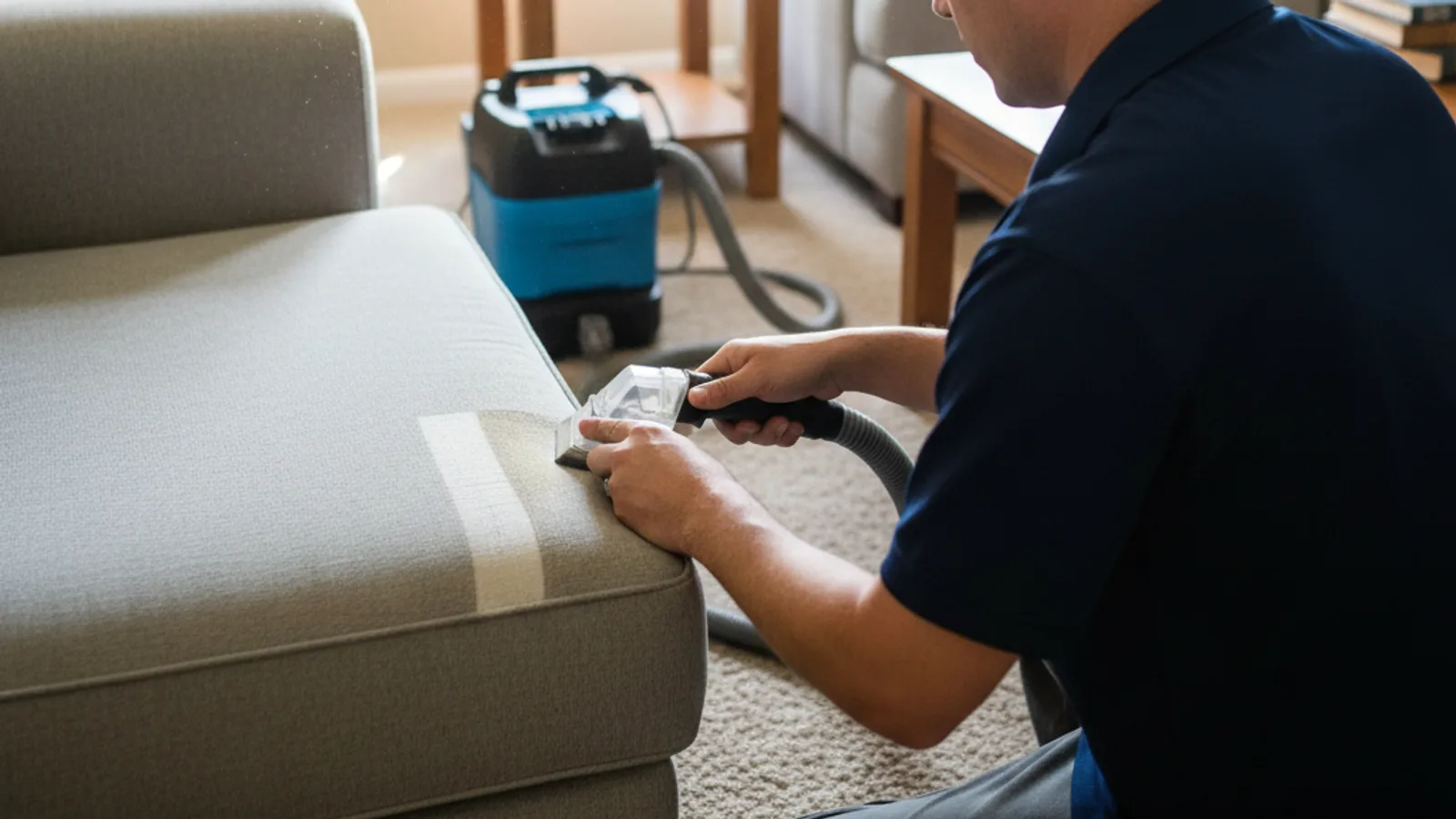
Rick brings professional extraction equipment to your house. He reads the fabric code on the tag, vacuums the piece, pre-treats the arms, the headrest line and the seat fronts, extracts at a setting matched to the fabric, then grooms the nap so it dries evenly. The couch never leaves the room.
The whole appointment happens where the couch already lives. Nothing gets wrapped up, carried out to a van or hauled off somewhere, which is worth saying plainly because plenty of people assume upholstery works the way dry cleaning does. Rick starts at the tag, usually stapled under a cushion or on the underside of the deck, and reads the cleaning code off it. Then the piece gets vacuumed properly, which matters more than it sounds: dry soil pulled out first is dry soil that never turns into mud when water hits it. After extraction he grooms the pile so the fibers lie the same direction, which is the difference between drying even and drying blotchy.
What Actually Comes Out of a Couch?
Direct answer
Body oil and hand soil, which is most of what makes fabric look dull. Food and drink spills. Pet dander, hair and the salts left behind by old accidents. And a real volume of ordinary house dust that has sifted down through the cushions into the deck underneath them.
Almost any four year old sofa in a lived in house can be read like a map. The headrest line is darker than the fabric above and below it, where hair and scalp oil touch the piece every evening. The inside faces of the arms carry a gray cast from hands, and the front edge of the seat cushions is the worst of the three, since that is where legs rest and where everybody sits down and stands up. Under the cushions surprises people: fine dust works down past them and settles on the deck. Old pet accidents leave urine salts in the fabric and the foam, and those salts pull moisture out of humid air. That is the mechanism behind a couch that smells fine in February and smells like a dog in July.
What Will Not Come Out, No Matter Who Cleans It?
Direct answer
Anything that is damage instead of soil. Sun fade along the window side of a piece. Dye that has bled out of a throw blanket or a new pair of jeans. Pilling, snags and cat claw damage. Some inks and some dyes. Cleaning takes soil out; it cannot put fiber or color back in.
This is the part most cleaning pages leave out, and leaving it out is how people end up disappointed by work that was done correctly. If a sofa has sat with its left arm toward a west window for six years, that arm is lighter than the right one, the dye is gone out of the fiber, and nothing applied to the surface brings it back. Dye transfer runs the other way: color moved in from something else, usually a cheap throw blanket or dark denim, and it is part of the fiber now. One more case is worth knowing. If urine went through the cushion, through the deck fabric and into the frame, cleaning and enzyme treatment reach what they can reach and the wood keeps what soaked into it. Rick will tell you that on the phone rather than after.
How Long Does a Couch Take to Dry in a Kansas City Home?
Direct answer
Most upholstery is dry to the touch in 2 to 6 hours. A low moisture clean on delicate fabric dries faster than that. Heavy pieces and humid Missouri weather sit at the long end of the range, and pointing a box fan at the couch shortens it noticeably.
Drying is mostly about air movement and how much moisture the air can still take on, which is why the same couch behaves differently in different months here. A January clean dries fast because the furnace is running and the air in the house is dry. The last week of July, with the humidity sitting where it does in this metro, takes longer and feels damp for longer even when the fabric holds the same water. A fan aimed at the piece helps, and so does running the air conditioning, which pulls moisture out of the room as a side effect of cooling it. Practical version: leave the cushions where Rick sets them, do not stack anything on the couch, and do not throw a blanket over a damp patch, because that traps moisture against the fabric.
Do You Clean Couches on Both Sides of the State Line?
Direct answer
Yes. We work the whole Kansas City metro out of Independence, Missouri, including Kansas City KS, Overland Park, Olathe, Shawnee and Prairie Village, at the same rate as Independence and with no travel surcharge. Same day is most often open closest to home base in Independence, Sugar Creek, Raytown and Blue Springs.
R&L works out of 2508 S Race Ave in Independence. Geography affects scheduling and not price. A couch in Sugar Creek or Raytown is a short drive, so if you call in the morning and need it done today, the Missouri side near home base is where that is most likely to work out. A couch in Olathe or Shawnee usually gets booked into a day already headed to the Kansas side. Either way the quote is the same and nothing is added for crossing State Line. Worth mentioning if you are coordinating around a date: upholstery is often cleaned in the same visit as the carpet in that room, which is less disruptive than two appointments.
When Is a Couch Not Worth Cleaning?
Direct answer
When the problem is structural instead of surface. A broken frame. Foam that has collapsed and will not spring back. Arms worn through to the batting. Urine that soaked through the cushion into the deck and the frame. Cleaning a piece in that condition costs money and does not fix what is wrong with it.
Nobody wants to pay to clean furniture they are about to get rid of, and Rick would rather say so up front than take the job. The honest test is whether the piece is dirty or whether it is finished. A dirty couch with a sound frame, foam that still has life in it and fabric that is intact is exactly what this service is for, and the change is usually dramatic. A couch where the seat has gone flat, a rail has cracked or a cat has taken the arms down to the batting has a condition problem that soil removal does not touch. Sentimental pieces are their own category and the answer there is often yes anyway, because the frames on older furniture are frequently better than what is sold now. If you are not sure which yours is, describe it on the phone.